
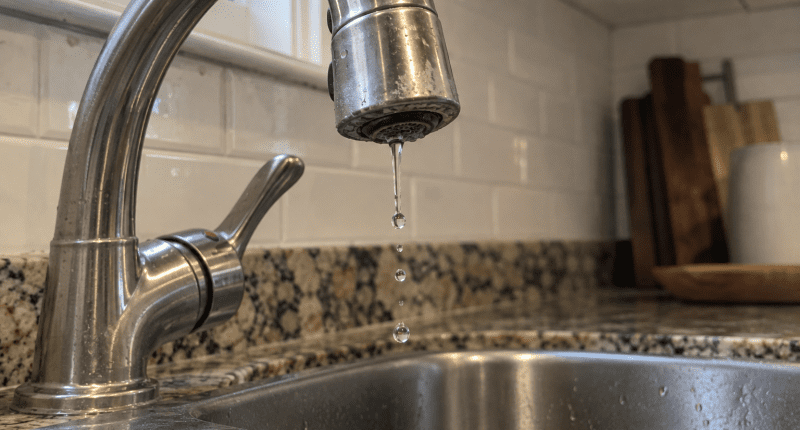
A dripping faucet costs little, while a burst supply line inside an exterior wall can soak drywall, flooring, and everything stored below it. Knowing when to leave water dripping in cold weather comes down to the forecast, the wind, and where the pipes in your house run. For Downers Grove homeowners, it also helps to know which parts of the house froze in past winters, since a pipe that froze once usually faces the same conditions the next time. If a pipe does freeze despite your precautions, our frozen pipe repair services are a phone call away.
Why Moving Water Helps Your Faucets
The American Red Cross recommends letting cold water drip from any faucet served by exposed pipes when the weather turns severely cold. Water moving through the pipe, even at a slow trickle, is warmer than freezing, which makes it harder for ice to form.
A drip doesn’t guarantee a pipe won’t freeze. Slow-moving water can still freeze under the right conditions. A trickle also gives pressure somewhere to go. A pipe usually bursts because ice forms a plug and pressure builds in the water trapped between that plug and a closed faucet, so an open tap gives that pressure a way out.
The 20-Degree Rule and Its Limits
The number most people hear is 20°F. That figure comes from field tests by the Building Research Council at the University of Illinois, which found that uninsulated pipes in an unheated attic started to freeze when the outdoor temperature fell to 20°F or below.
The Institute for Business and Home Safety points out that this threshold was set mainly for southern homes, where freezing weather is rare and plumbing often sits in unprotected spaces. Homes in colder climates are generally built with more protection for their plumbing, so a 20°F night alone isn’t always cause for alarm in the Chicago suburbs. The same University of Illinois research also found that pipes exposed to moving air, such as through a crack in an outside wall or a gap in the insulation, can freeze when the temperature is still above 20°F.
When to Leave Water Dripping in Cold Weather
Deciding when to leave water dripping in cold weather in DuPage County depends on more than the forecast low. Wind matters too, because it pushes cold air through cracks in exterior walls and gaps in insulation. During the January 2019 polar vortex, O’Hare dropped to -23°F on January 30, with a wind chill of -49°F.
Start dripping faucets on nights when any of these apply:
- The forecast calls for a severe cold snap, or the National Weather Service has issued a wind chill advisory or warning
- A sink sits on an exterior wall, or its supply lines run through a garage, crawl space, or unheated porch
- A pipe in the house has frozen in a previous winter
- You’ll be away overnight and can’t check the house in the morning
Mississippi State University Extension recommends keeping the drip going until temperatures stay consistently above freezing, not just until morning.
Which Faucets to Drip and How Much
Choose the faucets fed by the most exposed pipes, such as a kitchen sink on an outside wall or a bathroom over a garage. The Red Cross specifically mentions dripping the cold water. Hot water lines can freeze too if water isn’t moving through them, so some homeowners open both sides slightly on a two-handle faucet.
The Red Cross notes that even a trickle helps, so a slow, steady drip is enough for most faucets. Water rates vary by town, but one widely cited estimate puts a single dripping faucet at about 2 cents per night, which is far less than repairing water damage from a broken pipe.
Other Steps for the Coldest Nights
A dripping faucet works best alongside a few other habits recommended by the Red Cross:
- Open kitchen and bathroom cabinet doors so warm air reaches pipes on exterior walls
- Keep the thermostat at the same setting day and night during a cold snap
- Keep garage doors closed if water lines run through the garage
- Leave the heat set no lower than 55°F if you’ll be away from home
- Disconnect garden hoses and drain outdoor lines before winter
- Add pipe sleeves or other insulation to pipes in unheated areas
Signs a Pipe Has Already Frozen
If you turn on a faucet and only a trickle comes out, suspect a frozen pipe. The Red Cross lists exterior walls and the spot where the water service enters the house through the foundation as the most likely places. Keep that faucet open, and apply gentle heat to the frozen section with a hair dryer or a space heater kept a safe distance from anything flammable.
Never use an open flame, since thawing pipes with the wrong heat source can start a house fire. Once you find one frozen line, check the other faucets in the house as well. Our guide on how to tell if your pipes are frozen covers more warning signs, and the risks and repair of burst pipes in the Chicago area explains what happens if a frozen section splits.
If you can’t find the frozen area, can’t reach it, or can’t get it to thaw, call a licensed plumber rather than forcing it.
Help From Plumbing Pros in Downers Grove
Plumbing Pros is a family-owned and operated plumbing company with more than 20 years of experience serving Downers Grove and nearby suburbs. The company is OSHA certified, its work carries a one-year workmanship warranty, and broken water pipes and flooding are handled as priority calls with 24/7 emergency plumbing services. Financing is available through Wisetack, and military members, first responders, and teachers receive 10% off labor.
If a pipe in your home has frozen or burst, shut off the main water valve and call Plumbing Pros right away.


