
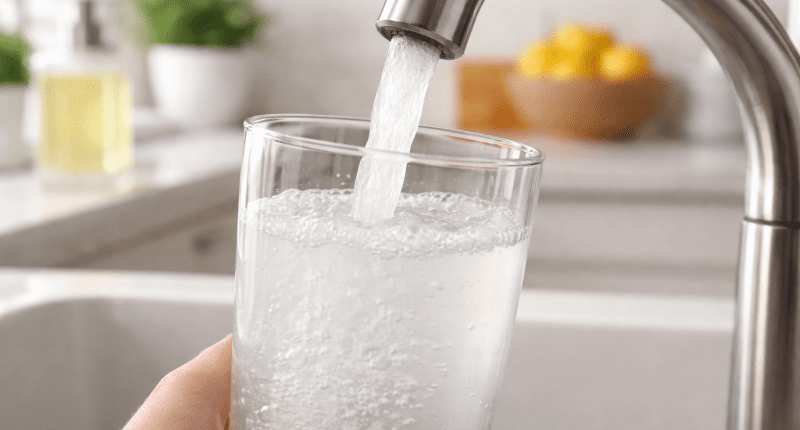
If you’ve ever turned on your kitchen faucet and wondered, “Why is my tap water cloudy?”, the answer is usually harmless; trapped air, minerals, or sediment are the most common culprits. In many homes, the cloudiness clears on its own within minutes and does not mean something is wrong. This article explains why tap water turns cloudy, how to identify the cause with plumbing inspections, and when the issue may require a plumber’s help.
Table of Contents
Why Is My Tap Water Cloudy? The Most Common Cause: Air in the Water
The most common reason tap water looks cloudy is air. Water inside your plumbing system is under pressure. That pressure allows air to dissolve into the water, even though you cannot see it.
When you turn on the faucet, the pressure drops. The air comes out of the water as tiny bubbles. These bubbles scatter light and make the water look white or milky. This matters because air bubbles are harmless. If the cloudiness clears quickly, your water is safe and your plumbing is usually working as expected.
How to Tell If Air Bubbles Are the Problem
You can check for air bubbles with a simple glass test. Fill a clear glass with tap water, place it on the counter and watch it for a few minutes. If the water clears from the bottom up, air bubbles are the cause.
This often happens more in cold weather. Cold water holds more air than warm water, so cloudy water is common in winter or after pressure changes. Knowing this helps you avoid unnecessary worry or calling a plumber when no repair is needed.
Minerals in the Water Can Cause Cloudiness
Another common cause of cloudy water is minerals, especially in areas with hard water. Hard water contains higher levels of calcium and magnesium. These minerals are safe, but under certain conditions they can make water look cloudy.
Changes in water pressure or temperature can cause minerals to come out of the water slightly. When that happens, tiny particles form and reflect light. This is important because mineral buildup does more than affect appearance. Over time, it can clog fixtures, reduce appliance efficiency, and shorten the lifespan of water heaters.
Learn how minerals in the water can cause issues with your water heater here: Why Does My Hot Water Run Out So Fast? 7 Causes & Fixes
How Mineral Cloudiness Looks Different
Mineral-related cloudiness behaves differently than air bubbles. Air bubbles usually clear within a few minutes. Mineral cloudiness may take longer or may not fully clear at all. You might also notice white residue on faucets, dishes, or inside kettles.
If your water is consistently cloudy and leaves scale behind, hard water may be the underlying issue.
Sediment From Household Plumbing
Cloudy water can also come from small particles inside your plumbing system. In older homes, pipes may release sediment or corrosion, especially after water sits unused for several hours. This is why cloudy water sometimes appears first thing in the morning.
Sediment can also be stirred up when water pressure changes or after plumbing work. This matters because sediment can wear down fixtures and valves over time, even if it is not immediately dangerous.
Related: 8 Signs You Need Repiping Services in Downers Grove, IL, ASAP
Water Heaters Are a Common Source of Cloudy Tap Water
Water heaters are one of the most frequent sources of cloudy water, especially when it only appears in hot water. Minerals naturally settle at the bottom of the tank. Over time, this sediment builds up. When hot water is drawn, some of that sediment mixes into the water and causes cloudiness.
If your hot water looks cloudy but your cold water does not, the water heater is likely involved. Regular flushing helps prevent this buildup and keeps the heater running efficiently.
Changes in the Municipal Water Supply
Sometimes cloudy water is caused by changes outside your home. City water systems regularly flush mains, repair pipes, or adjust treatment processes. These activities can stir up minerals or sediment in the system.
When this happens, cloudy water may appear temporarily throughout a neighborhood. It usually clears after running the tap for a short time. This context is useful because it helps you recognize when the issue is temporary and not related to your home’s plumbing.
When Cloudy Water Might Signal a Problem
While cloudy water is usually harmless, there are times when it deserves attention. If the water stays cloudy for a long time, smells unusual, tastes metallic, or looks discolored, the cause may be more serious.
Cloudiness paired with brown, yellow, or green color can indicate rust, pipe corrosion, or heavy sediment. These signs matter because they can point to aging pipes or damage that may worsen if ignored.
Simple Checks You Can Do at Home
Before calling a plumber, a few basic checks can help narrow down the cause. Compare hot and cold water. If only hot water is cloudy, the water heater is a likely source. Run the tap for one to two minutes and see if the cloudiness improves.
Watch how the cloudiness behaves in a glass. Rising bubbles suggest air. Settling particles suggest sediment. These observations make it easier to explain the issue accurately if professional help is needed.
Is Cloudy Tap Water Safe to Drink?
In most cases, cloudy tap water is safe to drink. Air bubbles and common minerals do not make water unsafe. Municipal water supplies are tested and regulated to meet safety standards.
However, safety depends on context. If cloudiness is combined with strong odor, unusual taste, or visible discoloration, it is best to avoid drinking the water until the cause is identified. When in doubt, using bottled water temporarily is a reasonable precaution.
How Plumbers Typically Address Cloudy Water
The solution depends on what is causing the cloudiness. For air-related cloudiness, no repair may be needed. For sediment, flushing pipes or fixtures can help. Water heater sediment is often resolved by flushing the tank.
For hard water, plumbers may recommend filtration systems or water softeners to reduce mineral buildup. Understanding the cause ensures the fix addresses the problem instead of masking it.
When to Call a Plumber
If cloudy water is persistent, getting worse, or limited to certain fixtures, it is time to call Plumbing Pros. We can check water pressure, inspect pipes, and evaluate the condition of the water heater. They can also rule out leaks or corrosion.
If the issue comes from the municipal supply, a plumber can help coordinate with the water provider. Early action helps prevent long-term plumbing damage.


