
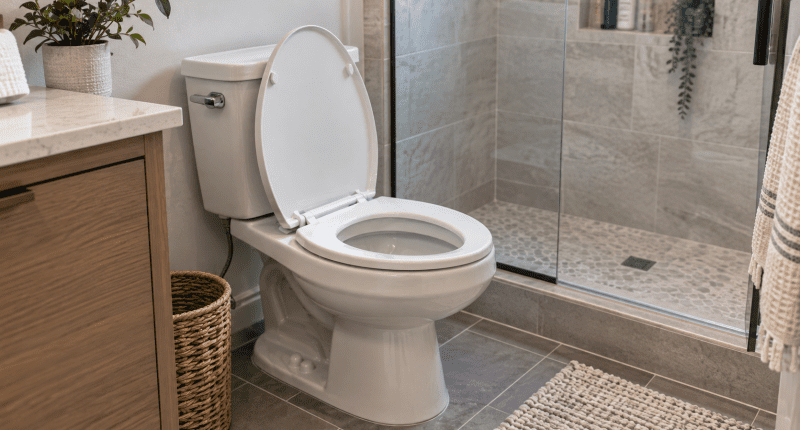
If you are wondering, “Why is my toilet bubbling when the shower is running?”, the most likely cause is a clog or airflow problem somewhere in your drainage system. Shower water and toilet waste eventually travel through connected drainpipes. When water cannot move freely through those pipes, trapped air may escape through the toilet bowl, creating bubbles or gurgling noises. For homeowners in Downers Grove, IL, repeated bubbling is worth paying attention to because the trouble may be deeper in the plumbing than a simple toilet clog.
The toilet itself is not necessarily the problem. The bubbling may start when you shower because the shower sends enough water into a shared drain to reveal an existing restriction. Depending on where that restriction is located, the cause could range from hair and soap buildup to a problem with the home’s main sewer line. If you’re already noticing slow drainage elsewhere, learning more about common clogged drain problems can help you recognize other warning signs.
Why Is My Toilet Bubbling When the Shower Is Running?
Your home’s drainage system relies on more than gravity. It also needs air. As shower water travels through the drain, air needs to move through the plumbing system at the same time. If a pipe is partially blocked or the plumbing vent cannot supply enough air, pressure changes inside the drainpipes.
That pressure has to go somewhere. Since your toilet contains an open water-filled trap, air may push through the bowl. That’s the bubbling you see and hear.
One small bubble isn’t always cause for alarm. Bubbling that happens regularly, gets louder, or occurs alongside slow drains deserves attention. The sooner you figure out what is restricting the system, the better your chances of avoiding a messy backup.
1. Your Shower Drain Is Partially Clogged
A partial drain clog is one of the first things to consider, especially if your shower has also started draining slowly – often traced back to items that shouldn’t have been flushed, like wipes marketed as flushable.
Every shower sends hair, soap residue, body oils, and small amounts of dirt down the drain. Some of that material can stick to the inside of the pipe. More debris catches on it over time, gradually making the opening smaller.
Hair is a particularly common culprit. It can collect below the drain cover and combine with soap residue into a dense clog. There are several ways to get rid of hair in a shower drain before the buildup completely blocks the pipe.
Look at how quickly the shower drains
You don’t need standing water several inches deep to have a drain problem. Early signs can be much less dramatic.
You may notice water pooling around the drain during longer showers or taking an extra minute to disappear after the water is turned off. The toilet might begin gurgling around the same time.
If the problem is limited to the shower area, a nearby clog could be responsible. A plumbing snake is one tool that may be used for certain drain obstructions, although it’s important to know how to use a plumbing snake without damaging the drain.
When several fixtures start acting up, however, the blockage may be farther down the drainage system.
2. The Main Sewer Line Is Restricted
A toilet bubbling during a shower can be an early warning of a main sewer line clog.
The main sewer line carries wastewater from the home’s smaller drain lines toward the municipal sewer system. A restriction in this line can affect toilets, showers, tubs, sinks, and other fixtures throughout the house.
Downers Grove homeowners should pay particular attention when drainage problems affect several areas of the home rather than a single bathroom.
Main line restrictions can develop from:
- Grease and waste buildup
- Excessive paper products
- Objects that should not have been flushed
- Tree roots entering damaged pipe sections
- Aging or deteriorating sewer pipes
- Sections of pipe that have shifted or developed low spots
As shower water reaches the obstruction, air may be pushed backward through connected pipes. Your toilet can become one of the easiest places for that air to escape.
Multiple slow drains are an important clue
Check other fixtures around the house.
Does a second toilet gurgle? Is a basement drain backing up? Does water appear in the bathtub when you flush a toilet?
Problems involving several fixtures make a main line obstruction more likely. Other signs of a clogged sewer line can include foul drain odors, recurring clogs, slow drainage throughout the home, and wastewater backing up through lower fixtures.
The lowest drains in the home are particularly important to watch. If wastewater cannot travel out through the sewer line, it can eventually find another exit. A basement floor drain, first-floor shower, or bathtub may be where you notice the backup first.
If the sewer pipe itself is damaged, sewer line repairs may be needed rather than simply clearing the obstruction.
3. The Plumbing Vent May Be Blocked
Not every bubbling toilet is caused by something stuck inside a drainpipe.
Your home’s plumbing system also includes vent pipes that allow air to enter and exit the drainage system. These vents help wastewater travel through the pipes while maintaining proper pressure.
When a vent becomes obstructed, the system may begin pulling air from nearby fixtures instead.
What can block a plumbing vent?
Most plumbing vent pipes terminate above the roof. That location leaves them exposed to outside debris. Possible obstructions include leaves, nesting material, and other debris. Problems with the vent piping itself can also interfere with proper airflow.
A vent issue may cause more than toilet bubbles. You might hear gurgling from drains or notice unusual changes in the water level inside a toilet bowl.
Because drain clogs and vent problems can create similar symptoms, the location of the trouble isn’t always obvious from inside the bathroom. A plumbing inspection can help narrow down where the drainage or venting issue originates.
4. There’s a Clog Near the Toilet
Sometimes the problem really is close to the toilet.
A partial clog in the toilet’s trap or branch drain can interfere with both water flow and air movement. The toilet may continue flushing, making it easy to assume everything is fine.
Then you take a shower and the toilet starts making noise.
Pay attention to the way the toilet behaves even when the shower isn’t running. A healthy flush should clear the bowl promptly without the water rising unusually high.
Signs that a toilet or nearby drain may be restricted include:
- Weak flushing
- Water rising high before draining
- Frequent toilet clogs
- Gurgling after a flush
- Changes in the bowl’s normal water level
- Bubbles when nearby fixtures are used
What has been flushed recently can also provide a clue. Wipes, paper towels, hygiene products, and other materials can create trouble even if they initially disappear from the bowl.
Products marketed as flushable can still contribute to drain and sewer line clogs because they may not break apart as quickly as toilet paper.
If the problem appears isolated to the toilet rather than several fixtures, toilet repair services can help determine whether the toilet or its nearby drain connection is responsible.
5. Your Sewer Pipe Could Be Damaged
A sewer line doesn’t need to be completely clogged to interfere with drainage.
A damaged pipe can create a rough or narrowed section that catches debris. Toilet paper, waste, and other material begin collecting around the damaged area until water has difficulty getting through.
Sewer pipes can develop cracks, separated joints, low spots, or other structural problems. Tree roots can also enter through openings and grow inside the pipe.
Recurring clogs deserve a closer look
Suppose you’ve cleared a drain several times, but the same problem keeps coming back. That changes the situation.
A temporary cleaning may remove accumulated material without addressing whatever caused it to collect in the first place.
Recurring drainage problems can sometimes point to:
- Root intrusion
- Cracked sewer pipes
- Misaligned pipe sections
- Deteriorated piping
- A sagging section of sewer line
This is one reason homeowners shouldn’t assume every clogged drain is a simple DIY fix. If you have dealt with the same problem more than once, these tips for clogged drains in Downers Grove can help you determine when the situation needs more attention.
A sewer camera inspection can also help locate trouble farther down the line. It allows a plumber to see whether buildup, roots, or pipe damage is interfering with drainage.
Can You Keep Showering If the Toilet Is Bubbling?
A single minor gurgle without any other drainage problems may not require you to stop using the shower immediately. Bubbling that happens every time you shower is different.
Repeated bubbling means something is affecting normal drainage or airflow. Continuing to send large amounts of water through a severely restricted system can eventually lead to a backup.
Limit water use and have the problem checked promptly if you notice:
- Water backing up into the shower or bathtub
- Several slow drains at once
- More than one toilet gurgling
- Sewage odors inside the house
- Toilet water rising without being flushed
- Wastewater coming through a floor drain
Don’t repeatedly flush toilets or run faucets to see whether the problem goes away. If the main line is blocked, every gallon of water added to the system needs somewhere to go.
If wastewater is already backing up or you can’t safely use your plumbing fixtures, review the signs you need emergency plumbing services in Downers Grove rather than waiting for the problem to get worse.
What Should You Do About a Bubbling Toilet?
Start with what you can observe without taking anything apart.
Think about which fixtures have recently shown problems. Has your shower become slower?Has another toilet gurgled? Have you dealt with recurring clogs?
If the shower itself is slow, a localized drain clog may be the first possibility to investigate. If several fixtures are affected, a shared drain or main sewer line becomes more likely.
Be cautious with chemical drain cleaners. Pouring chemicals into a toilet or shower doesn’t tell you where the blockage is, and a product intended for a small drain clog won’t correct a damaged sewer pipe or blocked plumbing vent.
The pattern of the symptoms is often more useful. A toilet that only struggles when flushed may have a localized problem. A toilet that bubbles whenever a shower, washing machine, or other high-volume fixture drains suggests the restriction could be farther down the system.
Don’t Ignore a Toilet That Keeps Bubbling
A bubbling toilet can give you some warning before a drain problem turns into a full backup. If you catch the issue while wastewater is still moving through the pipes, you may be able to address it before water starts coming back through a tub, shower, or floor drain.
For Downers Grove homeowners, pay attention to what happens elsewhere in the house. One slow shower may point to a localized clog. Several slow drains, repeated gurgling, or wastewater appearing in lower fixtures can signal a larger sewer or drainage problem.
If your toilet keeps bubbling when you run the shower, contact Plumbing Pros for plumbing service in Downers Grove, IL. Our team can determine what’s interfering with your drainage system and recommend the right repair before the problem leads to a backup.


